Antonio Busiello Photography Antonio Busiello Photography
  • Home
  • Stories
  • About
    • Bio
    • Exhibitions
    • Publication
    • Awards
    • Books
    • instagram
  • Contact
  • Buy Print
MENU
  • Home
  • Stories
  • About
    • Bio
    • Exhibitions
    • Publication
    • Awards
    • Books
    • instagram
  • Contact
  • Buy Print
Follow us

Stony Coral Tissue Loss Disease: A new Threat for the Ocean


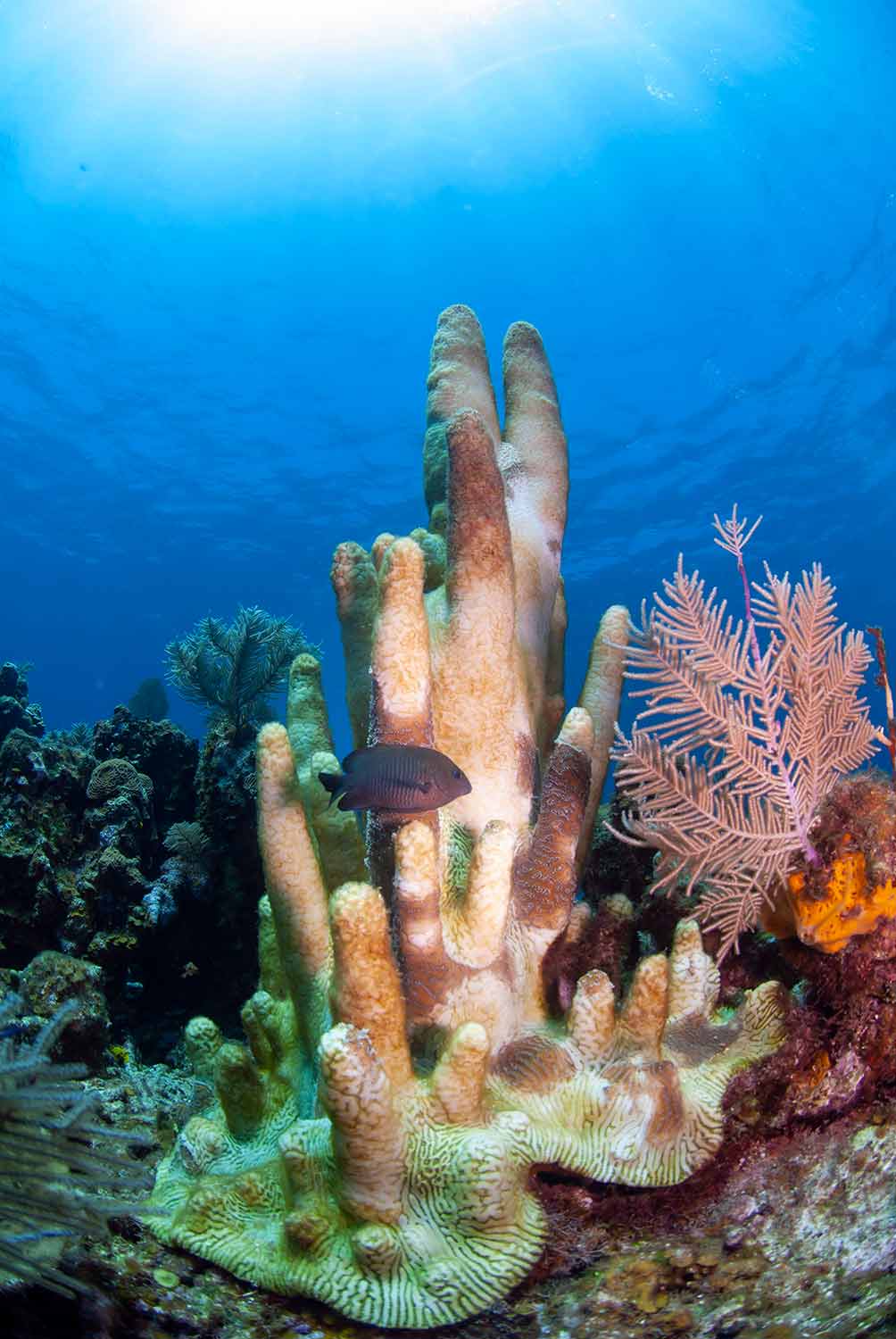
Pillar coral is my favourite coral formation in the Caribbean. They proudly grow straight towards the surface like underwater cathedrals shaped by time and marine currents. I love taking pictures of them and looking at all the little fish swimming around the spires.


Sadly I don't see too many pillar coral alive anymore. I keep looking for them every time I dive. Pillar corals, just like many other species of coral, have been affected by a new disease called Stony Coral Tissue Loss Disease (SCTLD).


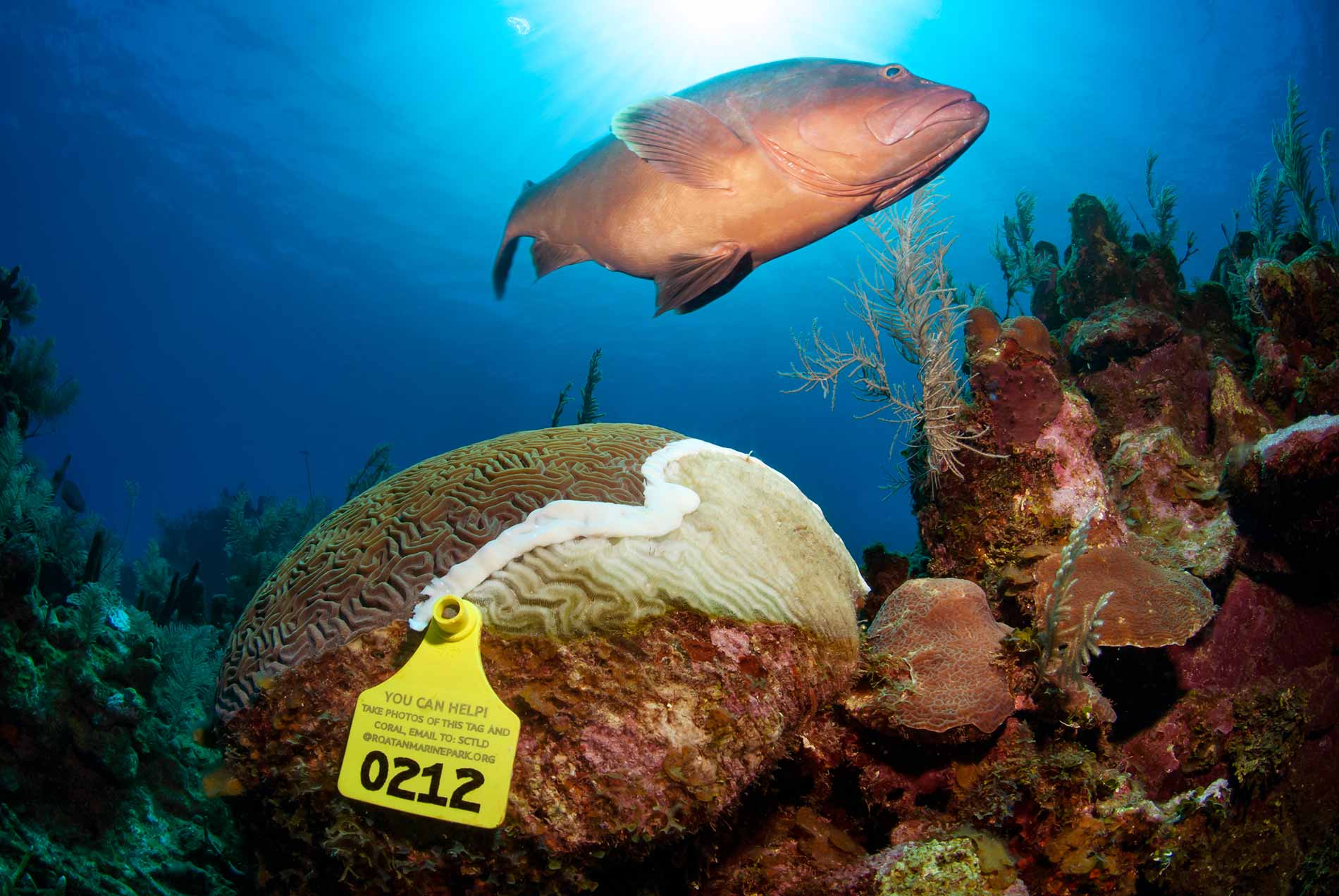
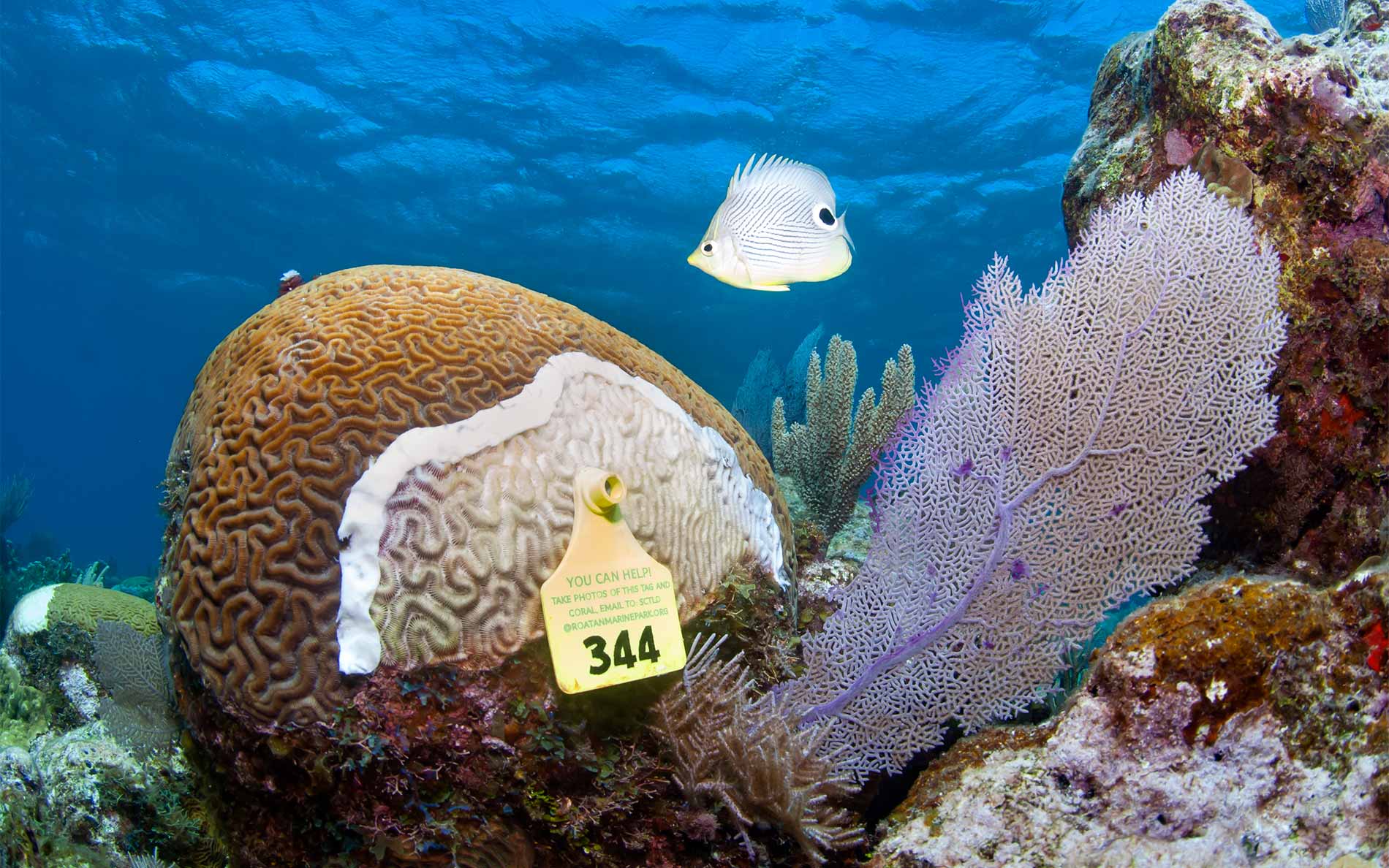
It all starts with a small white spot and in a few weeks a beautiful bright colored coral that took years to grow can end up as a dead rock with no way back.


I have been diving with the Roatán Marine Park for several weeks documenting the attempt to save the barrier reef from this new threat.


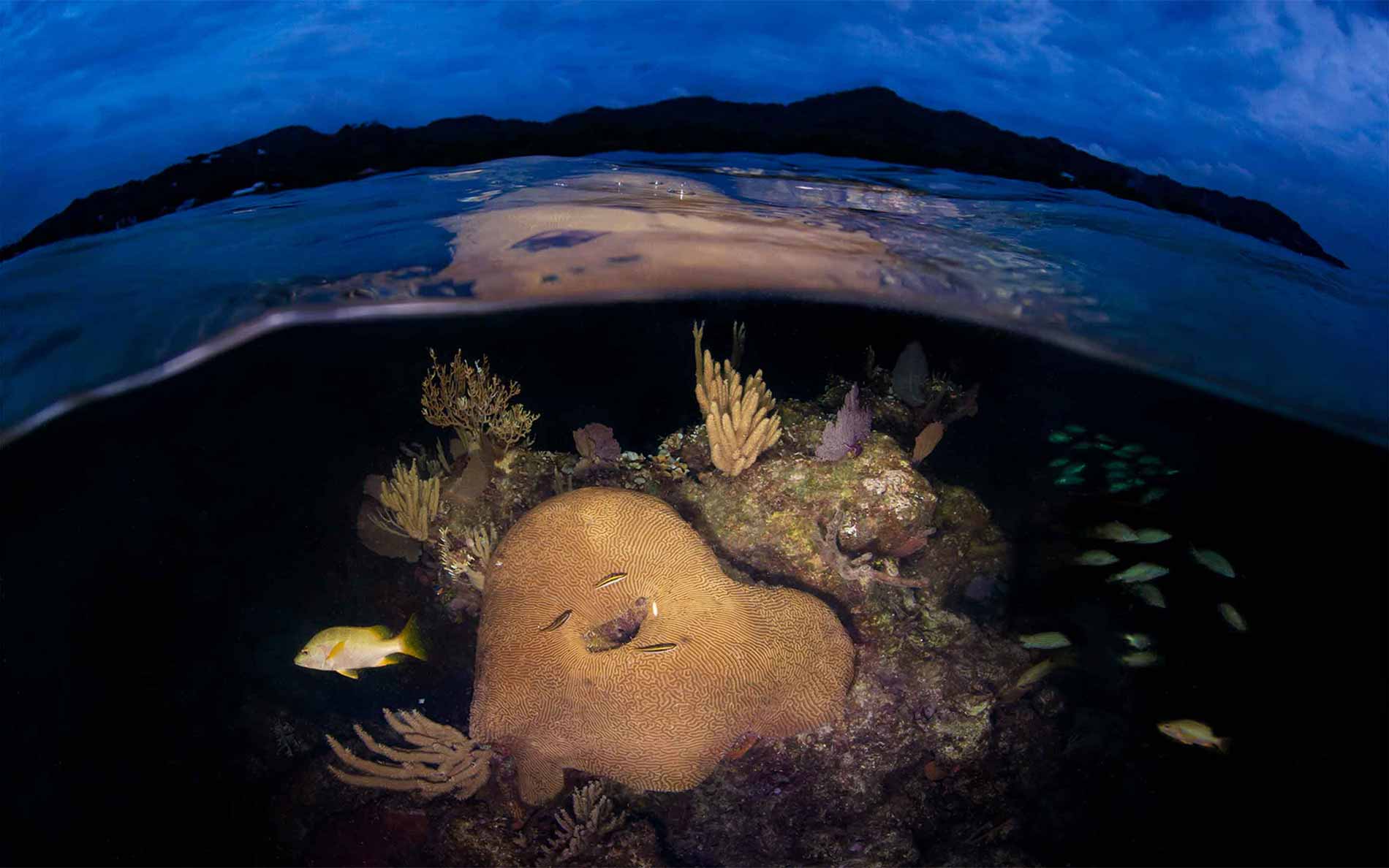
Roatán lays on The Mesoamerican Barrier Reef System (MBRS), also known as the Great Mayan Reef. It is the second largest Barrier Reef System on Earth. It stretches nearly 700 miles (1,000 kilometres) from the Yucatán Peninsula down through Belize, Guatemala to the Bay Islands of Honduras. It is home to hundreds of different kinds of coral and marine life. 


The barrier reef is a huge living organism, a complex and beautiful structure made up of different kinds of coral. Each coral is a colonial organism, made of hundreds of thousand tiny animals called polyps. 


There are two main types of coral, soft coral and hard coral. Hard coral, or stony coral, produces a rigid skeleton made of limestone (calcium carbonate), a hard substrate that eventually becomes rock, the foundation of a coral reef. That's why hard corals are considered the primary reef-building corals. 


More than 20 different kinds of hard coral are affected by the SCTLD. Unlike other coral diseases like bleaching, which coral can recover from, SCTLD does not leave any chance to survive or recover. Major reef builders such as brain corals and boulder corals are dying all over the Mesoamerican Barrier Reef, compromising the entire reef ecosystem in the Caribbean.


Roatan Marine Park biologist Gabriela Ochoa explained to me that: 


"The Stony Coral Tissue Loss Disease is characterized by sloughing of the tissue which leaves an intact white skeleton. One of its most alarming characteristics is the high frequency of coral mortality in those species affected.  For example, in Florida declines in coral density were approximately 30% loss and live tissue loss was upwards of 60% as result of the SCTLD outbreak. It all first started in 2014 in Florida off the Port of Miami after a major bleaching and sedimentation events and in a few years it has spread rapidly to most of the Florida Reef Track and neighboring countries. Scientist believe the disease disrupts the relationship between zooxanthellae (symbiotic algae that lives inside corals)  and its host resulting in the tissue loss.  Currently the disease has spread to 20 countries in the eastern Caribbean and in Mesoamerican Reef (MAR). In the MAR the disease has been confirmed in Mexico, Belize and Honduras." 


Scientists and marine biologists all over the Caribbean agree that the only solution to the problem, so far, is the application of antibiotics on the lesions of the infected coral. However, due to the aggressivity and the spreading timeframe of this disease it is very hard to fight back. The sick coral needs to be monitored even after it has been treated and in many cases, it needs to be retreated.  


During my dives with the RMP I have seen the extraordinary effort of an entire diving community dedicated to help the reef against this drastic situation. Local divemasters, resident divers and tourist along with many dive centers in Roatan and in other part of the Caribbean have been lavish with time and money to help their Marine Parks and other organizations in this complicated and difficult task. 


The Roatan Marine Park recommends to all divers and visitors to Roatan the following measure, to help slow down the spread of SCTLD


- Rent your gear locally


- If you’re travelling through the Caribbean, or diving at different sites on the same island, rent gear instead of bringing your own.  You may unknowingly transport the disease to an unaffected site if you use your own gear.  Rented gear will stay within the specific local area and it’s therefore less likely to contaminate new sites.


- When diving we ask you to please decontaminate your gear after every dive. 


- Soak non-sensitive equipment for 10 minutes in a 1% bleach solution, rinse in fresh water and then allow it to air dry. Wet suits, BCDs, masks and fins can also be decontaminated in the 1% bleach solution 


- Allow the bleach solution to degrade in the sun for 24 hours before you dispose of it.


- Regulators, computers, gauges, underwater cameras and other sensitive equipment should be decontaminated using fresh water and antibacterial dish soap or an isopropyl alcohol wipe and then dried.


- Never touch the reefs. Since the disease may be transmitted through contact, if you touch infected corals then you may pass the disease on to healthy coral.


I have been scuba diving, snorkeling and swimming in the ocean for most of my life and I like to think that the Reef will find a way to fight back. I hope that the help of dozens of volunteers every day will slow down the spread and give time to the reef to find a natural solution against this new threat. 


But every time I see that small white spot on a coral my diving heart loosens a bit. And unfortunately, many coral formations that I used to admire during my dives in Roatan are already gone.


Stony Coral Tissue Loss Disease: A new Threat for the Ocean
Coral in Peril ( SCTLD)
Stony Coral Tissue Loss Disease: A new Threat for the Ocean
Stony Coral Tissue Loss Disease
Stony Coral Tissue Loss Disease: A new Threat for the Ocean
Coral in Peril ( SCTLD)
Stony Coral Tissue Loss Disease: A new Threat for the Ocean

Seguici su  

Share 

© Antonio Busiello Photography
Cookie Policy
Privacy Policy
Impostazioni Cookies
  
Torna indietro
Visualizza Cookie Policy completa

Personalizza le tue preferenze relative al consenso

Dalle seguenti impostazioni hai la possibilità di esprimere le tue preferenze di consenso alle tecnologie di tracciamento che adottiamo per offrire le funzionalità e svolgere le attività sotto descritte. Per ottenere ulteriori informazioni in merito all'utilità e al funzionamento di tali strumenti di tracciamento, fai riferimento alla cookie policy del relativo proprietario. Puoi visionare e presonalizzare le tue scelte in qualsiasi momento.

Rifiuta tutto
Accetta tutto
Strettamente Necessari (Cookie tecnici) Maggiori info
I cookie tecnici sono quelli utilizzati al solo fine di 'effettuare la trasmissione di una comunicazione su una rete di comunicazione elettronica, o nella misura strettamente necessaria al fornitore di un servizio della società dell'informazione esplicitamente richiesto dall'abbonato o dall'utente a erogare tale servizio'.
Essi non vengono utilizzati per scopi ulteriori e sono normalmente installati direttamente dal titolare o gestore del Sito Web. Possono essere suddivisi in cookie di navigazione o di sessione, che garantiscono la normale navigazione e fruizione del Sito Web (permettendo, ad esempio, di realizzare un acquisto o autenticarsi per accedere ad aree riservate); cookie analytics, assimilati ai cookie tecnici laddove utilizzati direttamente dal gestore del sito per raccogliere informazioni, in forma aggregata, sul numero degli utenti e su come questi visitano il sito stesso; cookie di funzionalità, che permettono all'utente la navigazione in funzione di una serie di criteri selezionati (ad esempio, la lingua, i prodotti selezionati per l'acquisto) al fine di migliorare il servizio reso allo stesso. Per l'installazione di tali cookie non è richiesto il preventivo consenso degli utenti.
Statistica e gestione tecnica della navigazione Maggiori info
I sistemi informatici preposti al funzionamento dei siti web acquisiscono, nel corso del loro normale esercizio e per la sola durata della connessione, alcuni dati personali la cui trasmissione è implicita nell’uso dei protocolli di comunicazione di internet. Si tratta di informazioni che non sono raccolte per essere associate a Interessati identificati, ma che per loro stessa natura potrebbero, attraverso elaborazioni ed associazioni con dati detenuti da terzi, permettere di identificare gli utenti. In questa categoria di dati rientrano ad esempio: gli indirizzi IP o i nomi dei computer utilizzati dagli utenti che si connettono ai siti web, gli indirizzi in notazione URI (Uniform Resource Identifier) delle risorse richieste, le caratteristiche del browser utilizzato per la navigazione, la risoluzione dello schermo nel quale viene eseguito il browser nel dispositivo utilizzato, ed altri parametri relativi al sistema operativo e all’ambiente informatico dell’utente. Questi dati sono utilizzati al solo fine di ricavare informazioni statistiche anonime sull’uso dei siti e per controllarne il corretto funzionamento, e vengono cancellati immediatamente dopo l’elaborazione. I dati potrebbero essere utilizzati per l’accertamento di responsabilità in caso di ipotetici reati informatici ai danni dei siti.
Cookie di Profilazione:
Pubblicità, Remarketing e behavioral targeting Maggiori info
Questi servizi consentono di utilizzare i Dati dell’Utente per finalità di comunicazione commerciale in diverse forme pubblicitarie, quali il banner, anche in relazione agli interessi dell’Utente. Alcuni dei servizi sotto indicati potrebbero utilizzare Cookie o altri Identificatori per identificare l’Utente o utilizzare la tecnica del behavioral retargeting, ovvero visualizzare annunci pubblicitari personalizzati in base agli interessi e al comportamento dell’Utente, rilevati anche al di fuori di questo Sito Web.
Salva e continua